The condition
GSM
Genitourinary syndrome of menopause is the name for the vaginal, vulvar, and urinary changes that can happen as estrogen declines through perimenopause and menopause.
A quick menopause reference guide
A more factual, easier-to-scan guide to dryness, bladder symptoms, painful sex, menopause tissue changes, and the local estrogen treatment conversation.
What it is, what it helps with, the ways it comes, and what to say if you want to ask about local vaginal estrogen clearly.
In plain language
What GSM means in plain language.
Where vaginal estrogen may fit.
How menopause changes tissue over time.
What to ask your doctor at your visit.

Why this version is better
More factual. More visual. Easier to bring to a real appointment.
GSM + vaginal estrogen, in plain language
We talk a lot about flashes, sleep, and mood in menopause. But estrogen also supports the tissue of the vagina, vulva, and urinary tract. When estrogen drops through perimenopause and menopause, that tissue can lose thickness, stretch, and moisture, and daily symptoms can follow.
The condition
Genitourinary syndrome of menopause is the name for the vaginal, vulvar, and urinary changes that can happen as estrogen declines through perimenopause and menopause.
The treatment
A prescription local estrogen treatment that works in the tissue where it is needed. It is not the same as systemic hormone therapy like a pill or patch.
What happens
Estrogen helps keep vaginal and vulvar tissue thick, lubricated, and resilient.
Through perimenopause and menopause, estrogen declines over time.
Tissue can become thinner, drier, less elastic, and more fragile.
Symptoms may gradually worsen if nothing addresses the tissue change underneath them.
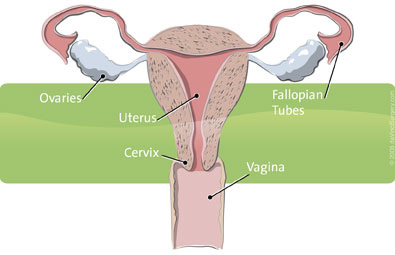
Pelvic anatomy
A simple visual reminder that menopause-related estrogen changes can affect bladder symptoms, vaginal comfort, and tissue quality at the same time.
The signs of GSM + what treatment can do
A lot of women normalize these symptoms for years. One of them, or several together, can still point to GSM.
Not only during sex, but often through the day as well.
Raw, burning, or tender tissue without an obvious infection.
Less elasticity and less lubrication can change comfort.
Feeling like you need to pee more urgently or more often.
Repeated urinary infections can overlap with menopause tissue changes.
Tissue may look thinner, smaller, or more delicate over time.
What treatment can help with over time
Tissue can thicken and recover over time.
Elasticity and comfort can improve.
Lubrication can return.
Pain and irritation can ease.
The UTI connection
Recent menopause and urology guidance includes local low-dose vaginal estrogen as an option in GSM, and in some postmenopausal women it is also discussed to help reduce recurrent UTIs.
What your doctor may offer
Applied inside the vagina with an applicator on the schedule your doctor prescribes. A very common local option.
A small tablet or insert placed vaginally on a set schedule. It delivers low-dose estrogen locally.
A soft flexible ring that releases a low, steady dose of estrogen in the vagina for a longer interval.
Another local prescription option some women discuss when painful sex is a major symptom.
Helpful for comfort and sex, but they do not replace treatment when GSM is the underlying issue.
Before you go looking at the drugstore, the stronger and more factual question is whether you need symptom relief alone or whether you need local estrogen treatment for GSM.
Aesthetic and wellness consult
If dryness, painful sex, bladder symptoms, or vaginal tissue changes are part of the picture, book a consult to talk through whether MonaLisa Touch belongs in your plan and how it compares with other options.
What to say, word for word
You do not have to vaguely say things feel off. Using the words menopause, GSM, local estrogen, dryness, urgency, or recurrent UTIs makes the conversation faster and clearer.
Start with this
“I want to talk about vaginal estrogen for GSM, and I want to understand my options for local estrogen treatment.”
If you have bladder symptoms
“I have dryness, urgency, or recurrent UTIs in menopause. Could local vaginal estrogen be part of the plan?”
If you want a clear comparison
“Which local option makes sense for me, cream, tablet, insert, or ring, and what should I expect over time?”
Fact sheet to bring to your doctor
Key facts
GSM stands for genitourinary syndrome of menopause.
It can include dryness, burning, painful sex, urgency, and recurrent UTIs.
Local vaginal estrogen is different from systemic hormone therapy.
Moisturizers and lube can help, but they do not treat tissue change the way prescription local estrogen can.
What I want to ask
Could my symptoms be GSM?
Which local option fits my symptoms best?
If I have recurrent UTIs, should vaginal estrogen be part of the plan?
If I have a more complex history, what is still on the table for me?
Medical references
1.AUA/SUFU/AUGS Guideline on Genitourinary Syndrome of Menopause, 2025.
2.The Menopause Society MenoNote on Genitourinary Syndrome of Menopause.
3.ACOG guidance on menopause-related urinary symptoms and recurrent UTIs after menopause.
4.ACOG Clinical Consensus on treatment of urogenital symptoms in individuals with a history of estrogen-dependent breast cancer.
5.Review article: Vaginal Estrogen for Genitourinary Syndrome of Menopause.
The bottom line
You do not need to adapt to this quietly. Dryness, bladder symptoms, painful sex, and menopause-related tissue change deserve the same attention as any other health concern.
Your next step
If menopause symptoms below the waist are affecting daily life, book a consultation with Dr. Stefanie and talk through local estrogen, comfort care, and whether MonaLisa Touch could help your specific symptoms.
Educational information only. Personal treatment decisions should always be made with a qualified clinician who knows your medical history.